On this page
- What will you actually have to say in your first week?
- The 3-month plan at a glance
- Month 1: the core you’ll use in every conversation
- Month 2: rehearse week one, one situation at a time
- Spain or Latin America: which differences actually matter?
- How do you practice speaking before you have anyone to talk to?
- Month 3: tune to your city and talk to real people
- What three months won’t do
Your first week in a Spanish-speaking city is almost nothing but small, practical conversations: a landlord, a bank clerk, the person selling you a phone plan, the cashier, the neighbor holding the elevator. When we left Boston for Buenos Aires, those were the conversations we were least ready for, even though they’re some of the most predictable you’ll ever have. This guide is the plan we’d give ourselves if we were packing again, built around those conversations instead of a textbook’s chapter order.
What will you actually have to say in your first week?
Most of week one comes down to five or six situations, and they’re predictable:
- Housing: viewing an apartment, asking about rent and fees, signing, reporting that the hot water doesn’t work.
- Money: opening a bank account or setting up a way to pay, asking what documents you need.
- Phone: buying a SIM card, choosing a plan, topping up.
- Food and errands: the supermarket, the corner store, the market counter where you have to ask for things by weight.
- Neighbors: introducing yourself, small talk in the hallway, asking for a recommendation.
- Phone calls: confirming an appointment or calling about a listing, with no gestures to help you.
None of these need advanced grammar. What makes them hard is speed: numbers said fast, addresses, and questions you didn’t expect. The plan below spends most of its time on exactly that.
The 3-month plan at a glance
| Month | Focus | Daily practice | By the end, you can |
|---|---|---|---|
| 1 | Present tense, questions, numbers, “repair” phrases | 30 min, at least half of it out loud | Introduce yourself, ask for what you need, understand prices and times |
| 2 | Week-one situations as spoken scripts, past tense | 30–45 min, rehearsing one situation per week | Get through each situation with some stumbles |
| 3 | Your destination’s vocabulary and accent, real conversations | 30–45 min, plus 2–3 conversations a week with people | Handle the surprises and keep a conversation going |
Month 1: the core you’ll use in every conversation
Start with the present tense of about twenty verbs you’ll lean on constantly: ser, estar, tener, ir, querer, poder, necesitar, buscar, pagar, hacer, vivir, trabajar, llegar, saber, entender, decir, venir, dar, poner, abrir. With those, plus a few frames, you can say most of what week one requires:
- Necesito abrir una cuenta. (I need to open an account.)
- Quisiera ver el departamento. (I’d like to see the apartment.)
- ¿Aceptan tarjeta? (Do you take cards?)
- Estoy buscando una farmacia. (I’m looking for a pharmacy.)
Learn the question words cold (qué, cuándo, dónde, cuánto, cómo, quién, por qué) because you’ll be asking far more than answering.
Numbers deserve their own daily drill. Rent, prices, phone numbers, apartment floors and street addresses all come at you fast, and “I understood everything except the number” is a frustrating way to fail. Have someone (or an audio track) read you random prices and write them down until you stop translating in your head.
Then memorize the phrases that rescue a conversation instead of ending it:
- ¿Me lo puede repetir más despacio, por favor? (Could you repeat that more slowly, please?)
- Perdón, no entendí la última parte. (Sorry, I didn’t get the last part.)
- ¿Cómo se dice “lease” en español? (How do you say “lease” in Spanish?)
- ¿Me lo puede escribir? (Could you write it down for me?)
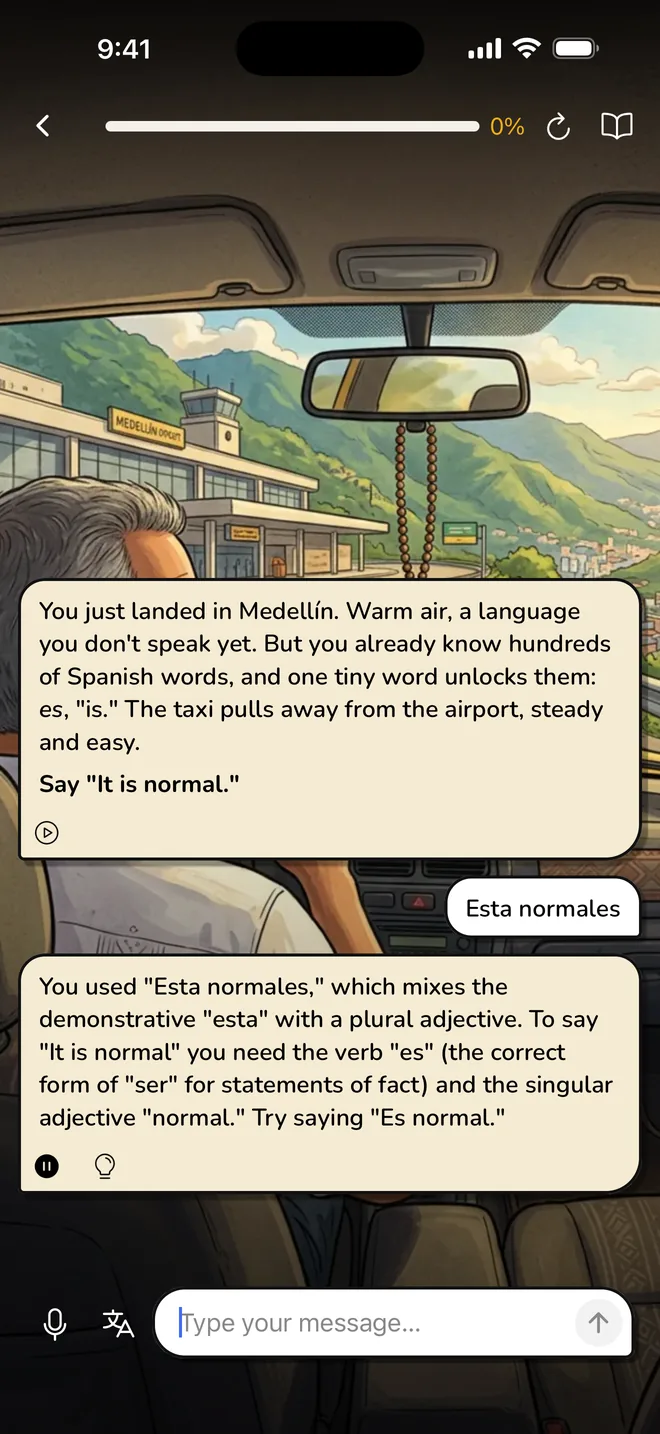
The rule for this month: say everything out loud, in full sentences. Reading quisiera abrir una cuenta and saying it to someone are different skills, and only the second one helps you at the bank. This is the part Avita was built for. Every lesson is a conversation inside a story, and you answer out loud about 49 times, with each answer graded and corrected, so a month of daily lessons is a lot of speaking reps.
Month 2: rehearse week one, one situation at a time
Take one situation per week. For each one, write down the five to eight things you’ll need to say and the five things the other person is most likely to ask you. Then practice both sides out loud until you can do it without looking. Add the past tense this month too (llegué la semana pasada, I arrived last week; ya pagué, I already paid), because you’ll be explaining what already happened.
Finding an apartment
These examples use Buenos Aires Spanish, where we lived; the notes give the words you’ll hear elsewhere.
- Estoy buscando un departamento de un dormitorio. (I’m looking for a one-bedroom apartment.) In Spain you’ll hear piso, in Colombia apartamento. Buenos Aires listings usually count rooms instead, so a one-bedroom shows up as dos ambientes.
- ¿Cuánto es el alquiler por mes? (How much is the rent per month?)
- ¿Las expensas están incluidas? (Are building fees included?) Expensas is the Argentine word; in Spain that’s los gastos de comunidad, in Colombia la administración.
- ¿Qué piden para alquilar? (What do you require to rent?)
- ¿Puedo verlo esta semana? (Can I see it this week?)
- No sale agua caliente. (There’s no hot water.)
Opening a bank account
- Quisiera abrir una cuenta. (I’d like to open an account.)
- ¿Qué documentos necesito? (What documents do I need?)
- ¿Tiene alguna comisión? (Are there any fees?)
- Se me bloqueó la tarjeta. (My card got blocked.)
Requirements vary by country and by bank, so ask before you go. In Spain, for example, banks generally ask for an NIE (the foreigner identification number) for a resident account, while some offer non-resident accounts with a passport. Knowing the word NIE, or whatever the local equivalent is, saves a wasted trip.
Getting a SIM card
- Quiero un chip prepago. (I want a prepaid SIM.) Most of Latin America says chip; in Spain it’s una tarjeta SIM.
- ¿Cuántos gigas trae? (How many gigs does it come with?)
- ¿Cómo hago una recarga? (How do I top up?)
- ¿Necesitan mi pasaporte? (Do you need my passport?) Bring it either way; many places register phone lines to an ID.
Groceries and errands
- ¿Me da medio kilo de tomates? (Can I have half a kilo of tomatoes?)
- ¿Quién es el último? (Who’s last in line?) At market counters, especially in Spain, you ask this when you arrive and then go after that person.
- ¿Efectivo o tarjeta? (Cash or card?) You’ll hear this one, so practice understanding it.
- No, así está bien, gracias. (No, that’s fine, thanks.)
Small talk with neighbors
- Hola, soy Sam. Me acabo de mudar al 4B. (Hi, I’m Sam. I just moved into 4B.)
- ¿Hace mucho que vive acá? (Have you lived here long?)
- ¿Me recomienda alguna panadería por acá? (Can you recommend a bakery around here?)
- ¡Qué calor hace hoy! (It’s so hot today!)
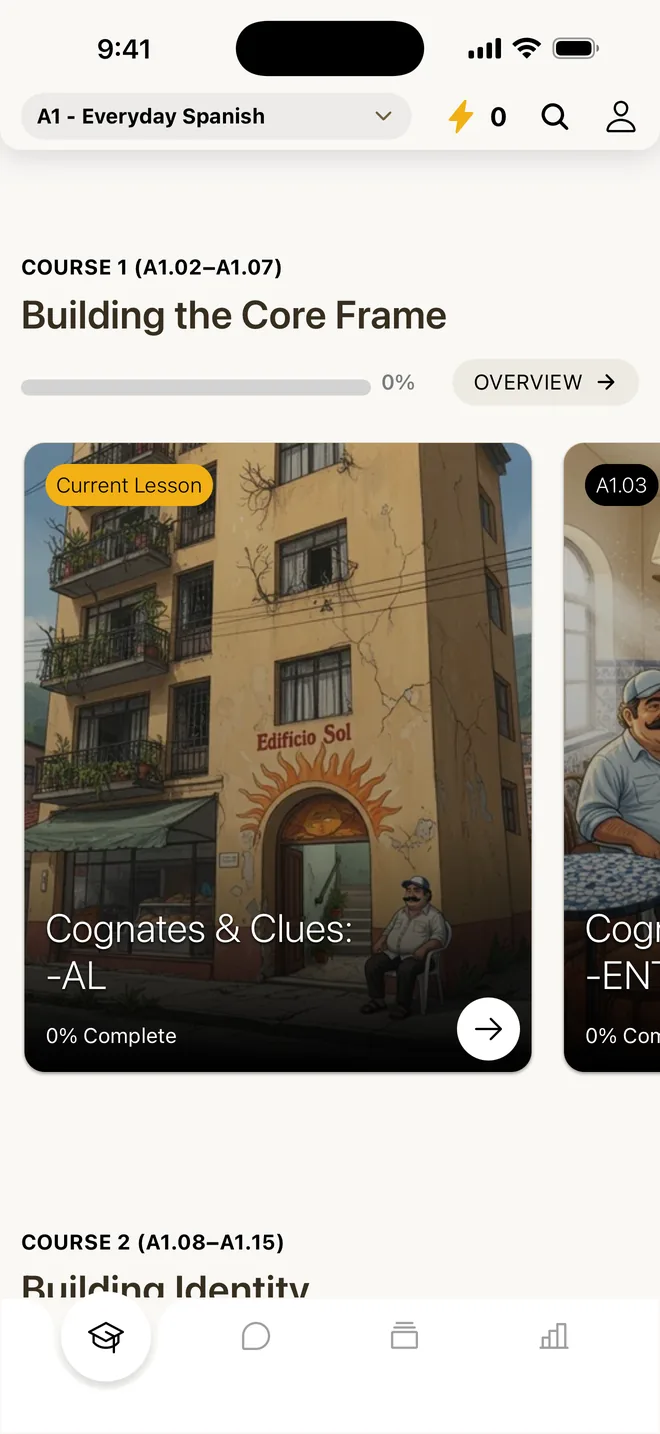
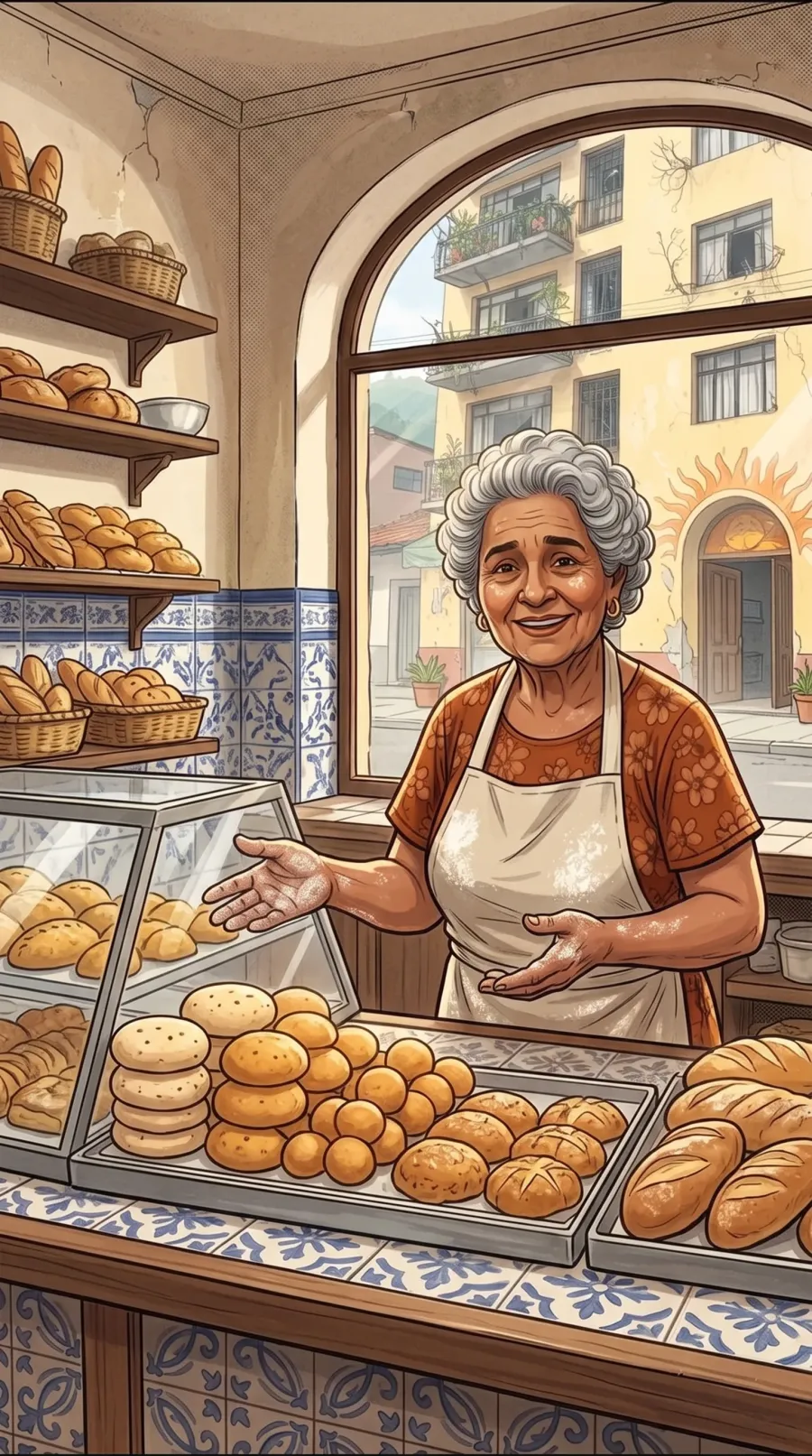
Neighbors are where week-one Spanish turns into friendships, and they’re forgiving. Avita’s Spanish course happens to be set in an apartment building, Edificio Sol in Medellín, where you meet Doña Carmen at the bakery and neighbors like Mateo and Inés, so many of its conversations sound a lot like this.
Phone calls
Calls are harder than any face-to-face situation because you lose lips, gestures and the option to point. Script the first two lines (Hola, llamo por el departamento de la calle Gorriti, Hi, I’m calling about the apartment on Gorriti Street) and have your repair phrases ready. If you freeze, ¿Le puedo mandar un mensaje? (Can I send you a message?) is a perfectly good escape. A lot of everyday logistics in Spain and Latin America happen over WhatsApp anyway, and writing buys you time.
Spain or Latin America: which differences actually matter?
The grammar is the same. The differences that trip up new arrivals are a handful of everyday words, how people say “you,” and accent. Here’s what’s worth knowing before you land:
| English | Spain | Much of Latin America |
|---|---|---|
| you all | vosotros (informal), ustedes (formal) | ustedes for both |
| apartment | piso | departamento (Argentina, Mexico, Chile), apartamento (Colombia, Venezuela) |
| cell phone | móvil | celular |
| car | coche | carro (Colombia, Venezuela, much of Mexico), auto (Argentina, Chile) |
| computer | ordenador | computadora |
| juice | zumo | jugo |
| to take (a bus) | coger | tomar |
That last row matters: coger is everyday in Spain but vulgar slang in Mexico, Argentina and other countries. Use tomar in Latin America and you’re safe everywhere.
How people say “you” changes from place to place. In Argentina and Uruguay, people use vos instead of tú, with its own verb forms (vos tenés, vos sos), and you’ll hear it in parts of Central America and Colombia too, Medellín included. You don’t need to produce it on day one, since tú is understood, but learn to recognize it before you get there. In much of Colombia and in Costa Rica, usted isn’t only formal; people use it with friends and family too. Spain, especially among younger people, uses tú readily with strangers.
Accent is the other surprise. Most of Spain pronounces z and soft c like English “th.” In Buenos Aires, ll and y sound like “sh,” so calle comes out close to “cashe.” An hour of local podcasts or TV a week in month three does a lot for your ear.
Our advice: learn one standard variety in months one and two and switch to your city’s version in month three. If you’re moving to Spain, Latin American Spanish (which is what Avita teaches) still gets you through every situation above; you’ll add vosotros and a few dozen words once you’re there.
How do you practice speaking before you have anyone to talk to?
Speaking alone feels silly at first, but it’s practice you can do every day without booking anyone. The linguist Merrill Swain’s output hypothesis (1985), and her later work on it, argues that producing language makes you notice what you can’t say yet, and that this noticing is part of how learning happens. We go through the research behind that in why speaking early works. For a move, the point is practical: you want to find those gaps at your desk, not at the bank.
A few ways to do it:
- Talk through your scripts standing up, at normal speed, as if the person were in front of you. Then swap roles and answer the questions you think they’ll ask.
- Record yourself on your phone and listen back. You’ll hear the hesitations you don’t notice in the moment.
- Narrate your day in Spanish while you cook or walk: Ahora estoy cortando la cebolla. Después voy a llamar al banco. (Now I’m chopping the onion. Then I’m going to call the bank.)
- Use an app that makes you answer out loud and corrects you. Avita Pro’s role-play scenarios, such as a trip to the market or a problem with your hotel room, are close to what week one looks like.
There’s more on this in our guide to practicing speaking alone.
Month 3: tune to your city and talk to real people
By now you have the core and the scripts. Month three is about surprises.
Switch your listening to your destination. Find a podcast, a YouTube channel or a TV show from the city you’re moving to, and write down every word that differs from what you learned. You’ll collect your city’s version of apartment, bus and cool in a couple of weeks.
Have two or three real conversations a week. This is where a human helps most. A tutor, a language exchange partner (intercambio) or a friend-of-a-friend from your destination will interrupt you, speak at full speed and go off script, which is exactly what your landlord will do. If you’re weighing a tutor against an app, our app vs tutor comparison lays out where each one fits.
Do a dress rehearsal in the last week before you fly: run every week-one scenario back to back in one session. Whatever you stumble on is your flashcard list for the plane.
What three months won’t do
Three months won’t let you follow a fast group conversation at a crowded dinner. You’ll miss half of what the guy at the phone store says. That’s normal, and it isn’t the goal. The goal is to get things done, ask for repetition without panicking and keep going. Once you’re living in Spanish, the hours add up quickly; our guide on how long it takes to become conversational has realistic numbers.
Our take: Aim to arrive able to get things done and to ask for help without panicking, not to sound fluent. The neighbor who helps you figure out the gas bill is the start of your real Spanish education. Our goal is to teach you enough to make a friend. After that, they’ll teach you the rest.
Questions people ask
Can I learn enough Spanish in 3 months before moving abroad?
Enough to handle your first week, yes, if you practice speaking every day. In three months you can learn the present and past tense, numbers, the phrases for renting, banking, buying a SIM card and shopping, and how to ask people to repeat or slow down. You won't follow fast group conversations yet. That comes from living there, and it comes faster when you arrive able to get things done.
Should I learn Spain Spanish or Latin American Spanish before I move?
The grammar is the same, so either one works for the first two months. The differences are mostly everyday words (piso or departamento, móvil or celular, coche or carro), how people say "you" (vosotros in Spain, vos in Argentina) and accent. Learn one variety, then spend your last month listening to podcasts and TV from your destination and picking up its vocabulary.
How many hours a day should I study Spanish before moving?
About 30 to 45 minutes a day is enough for a 3-month plan, as long as at least half of it is spoken out loud. Daily practice beats long weekend sessions because speaking is a skill you build through repetition. In the last month, add two or three real conversations a week with a tutor, a language exchange partner or someone from your destination.
Is it better to learn Spanish before moving or after I arrive?
Both, but arriving with some Spanish makes the first weeks much easier. The situations you hit right away, like viewing apartments, opening a bank account and setting up a phone, are predictable, so you can rehearse them beforehand. Handling those basics yourself also means you can start conversations with neighbors from the first day instead of avoiding them, and that's where most of your learning will happen once you arrive.
What Spanish do I need for my first week in a new country?
Focus on five situations: housing, money, your phone, groceries and errands, and small talk with neighbors. For each one, learn the eight or so sentences you'll say and the questions you'll be asked. Add numbers (prices, addresses, phone numbers) and phrases like ¿Me lo puede repetir más despacio? (Could you repeat that more slowly?), which keep a conversation going when you get lost.