Reed
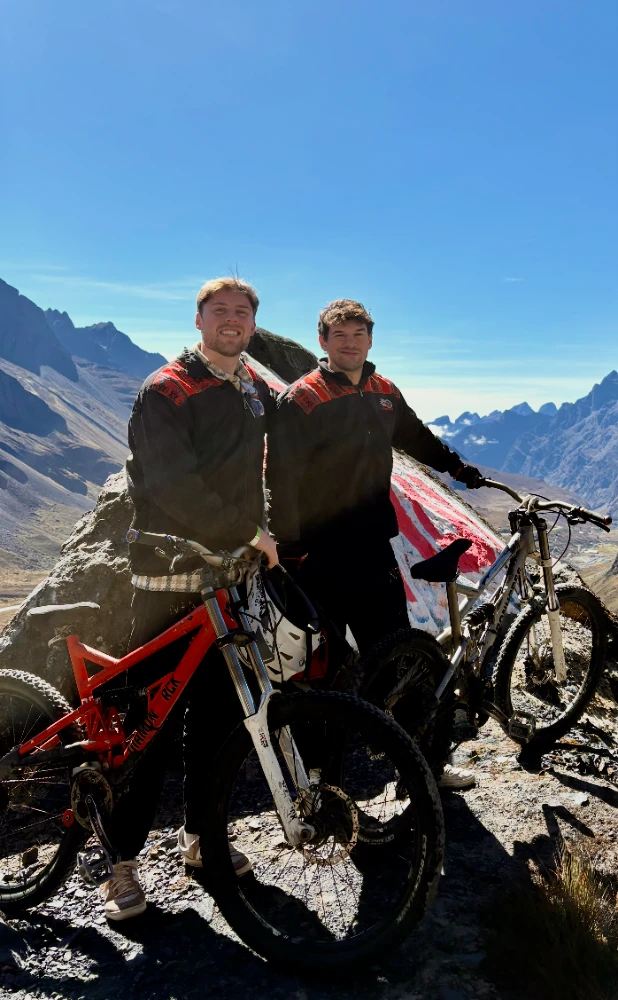
Reed co-founded Avita with Ethan, his best friend of 15 years. They quit their jobs in Boston and moved to Buenos Aires to learn Spanish, and built the speaking app they couldn't find. Reed is still learning, and still uses Avita every week.
Written by Reed
- Compare
Avita Edu vs Extempore: which fits your Spanish class?
Pick Extempore if you want to write your own open-ended oral tasks, hear every response and score it with a rubric, run live student conversations, or buy for a whole department.
- Compare
Best speaking practice tools for Spanish teachers (2026)
For quick formative speaking, a free recorder such as Vocaroo or the recording built into some Google Classroom plans is enough, provided you'll listen to the clips yourself.
- Guide
AP Spanish speaking practice for the new May 2027 exam
On the May 2027 AP Spanish Language and Culture Exam, a 3-minute Project Presentation and a four-question Project Q&A replace the simulated conversation and the cultural comparison, and together they count for 35% of the score.
- Guide
Heritage speakers in Spanish class: a guide for teachers
Find out what each heritage speaker can do in speaking, reading and writing before you plan for them, then give them harder work of their own instead of helper duty.
- Guide
How to assess speaking in Spanish class with five sections
Assess speaking with many small formative checks and a few scored tasks: an unrehearsed conversation for interpersonal skill and a prepared talk for presentational skill, each judged on the task, how understandable it is, the size of the language and how well the student keeps it going.
- Guide
Spanish speaking homework ideas you can copy and assign
Speaking homework works best when it's short, personal and easy to collect: one prompt in Spanish, 30 to 90 seconds on a phone recorder, a light completion grade, and a quick follow-up question in class the next day.
- October 27, 2026
What 50 spoken answers in one lesson look like
An Avita lesson asks you to say about 50 things out loud (German lessons about 60), and a full course is roughly 10,000 spoken answers (German about 12,000).
- Compare
Avita vs Babbel: which gets you speaking? (2026)
Babbel is a broad, well-built course in 13 languages where speaking is one exercise type among several, mostly repeating a word or phrase you just heard, plus a beta conversation feature called Babbel Speak.
- Compare
Avita vs Pimsleur: which gets you speaking? (2026)
Pimsleur and Avita both make you answer out loud, but Pimsleur is a 30-minute audio course you can do hands-free, while Avita has you read a short grammar text and then hold a conversation in which every answer is graded.
- Compare
Avita vs a tutor (italki, Preply): which gets you speaking?
A tutor on italki or Preply gives you what no app can: unscripted conversation with a real person who adapts to you, paid per lesson at times you book.
- Compare
Best language apps for speaking practice, by type (2026)
Language apps that make you speak fall into four groups: repeat-after-me (Pimsleur, Speak), guided conversation where you build your own sentences (Avita, plus newer features in Speak, Babbel, Busuu and Duolingo), free conversation with a real person (italki, Preply, Tandem, HelloTalk) and courses that have you speaking from day one (Avita, Language Transfer).
- Compare
Duolingo alternatives for speaking: 7 options compared (2026)
If Duolingo hasn't gotten you talking, pick the alternative that matches your situation: Avita if you need to hold conversations in Spanish, French, Italian or German soon (about 50 spoken answers per lesson, each graded and corrected), Speak for Japanese, Korean or Mandarin, Pimsleur or the free Language Transfer for learning by ear, Busuu or Babbel for a full structured course, and italki when you want a real teacher.
- Guide
How long to become conversational in a language? (2026)
For most English speakers, conversational in Spanish, French or Italian (around CEFR B1) takes a few hundred hours of study, roughly a year at an hour a day; German takes longer.
- Guide
Learn Spanish before moving abroad: a 3‑month plan
Three months is enough to get through your first week abroad in Spanish if you practice the right situations out loud: renting an apartment, the bank, a SIM card, groceries and chatting with neighbors.
- Guide
Learning Spanish for your partner's family
To talk with a partner's Spanish-speaking family, prepare the conversations that come up on every visit: meeting the parents, the family dinner and phone calls with grandparents.
- Guide
Understand a language but can't speak it? How to fix it
Understanding and speaking are separate skills: comprehension grows from listening and reading, but speaking only grows when you practice pulling sentences out of memory yourself.